
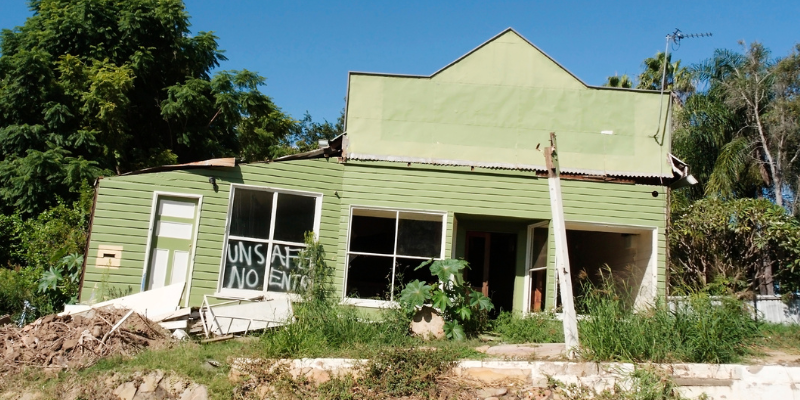
Your house is crumbling. The city just plastered a bright red “condemned” notice on your front door. Now what? Houses have been purchased in California for over a decade, and this scenario has played out hundreds of times. Homeowners get that sinking feeling when they realize their property’s been declared unfit for human habitation. But here’s what most people don’t know: there are still options, even when a house seems worthless.
How to Sell a Condemned House in California: Complete Legal Guide
Even though California law allows the sale of condemned properties, certain criteria must be met before an offer is made or an agreement is entered into. A house that is condemned is considered by the local or state government to have an unsafe structure, a severe health hazard, or other severe building code violations. Occupation of such a house is illegal until the issues are resolved. However, this does not necessarily mean the property is irreparable.
Properties condemned by the government should be seen by developers as opportunities, not dead ends. These are opportunities for a developer with the right knowledge to take risks. Even during a high-priced real estate market, a developer can find value and develop a profitable project. By 2025, the statewide median home price will be $884,350.
You may sell a condemned house in California, but most traditional buyers and mortgage lenders do not prefer buying these houses due to financing and liability concerns. Therefore, these transactions are cash sales in which properties are bought as-is, and sellers do not need to spend money on repairs or wait long for approvals. Understanding your options and taking the actions you want as soon as possible, before additional requirements and/or penalties are imposed.
Casey Buys Houses provides a fast, as-is cash offer for condemned properties in California, giving owners a simple way to sell without repairs, financing delays, or traditional market restrictions while quickly converting the property into cash.
Understanding California Condemnation Laws and Property Rights
In California, there are two broad categories of law pertaining to condemnation. Knowing which framework impacts your rights and what protections and remedies you can pursue. California has what are generally known as formal eminent domain actions taken by a public agency and regulatory (or informal) takings, which are government actions that impose restrictions on the use of property, short of a physical appropriation. Each has its own distinct set of guidelines that govern the procedures, duration, and criteria for establishing a compensation claim.
Understanding Eminent Domain vs Code Enforcement Condemnation
Eminent domain and code-enforcement condemnation are distinct legal processes with different outcomes for homeowners. Understanding the difference can help property owners protect their rights.
Eminent domain is the government’s right to take private property for public use. It’s been a fundamental right for a very long time. You can find it in the U.S. Constitution (Fifth Amendment) and in the Constitution of the State of California (Article 1, Section 19). The law also mandates that the government must pay the fair market value when they take this property.
Code enforcement condemnation happens when your property violates local building codes or safety standards. No direct compensation is provided. Owners typically recover value only by repairing or selling. This is the type of condemnation most homeowners face.
The distinction matters enormously. With eminent domain, you get paid. With code enforcement, you’re on your own to figure out how to recover your investment. That gap in treatment often shapes how property disputes are resolved and challenged.
California Building Code Violations That Lead to Condemnation
The most common reasons a house is condemned in California are health and safety hazards or major structural problems. A property that poses a danger to its occupants or the surrounding community can be targeted for condemnation by local building and code enforcement agencies.
Here are the violations I see most often in condemned properties:
Structural Issues: Foundation damage or settling, roof collapse or severe damage, load-bearing wall failures, and fire damage affecting structural integrity.
Health and Safety Hazards: Mold contamination throughout the property, sewage backups or plumbing failures, electrical systems that pose fire risks, and asbestos or lead paint hazards.
Basic Habitability Problems: No running water or electricity, broken windows and doors, pest infestations, and hoarding conditions.
Vacant properties that lack basic utilities, such as water, electricity, and sanitation facilities, often meet the criteria for condemnation. Enforcement agents in Los Angeles’s housing sector base their decisions on these conditions outlined by California’s property ordinance guidelines.
Steps to Take When Your Property Receives a Condemnation Notice
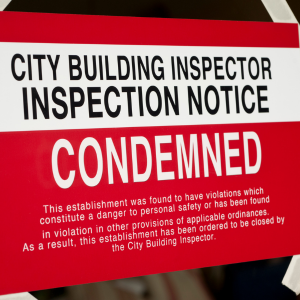
Receiving a red notice doesn’t mean you should panic. It’s important to stay calm and immediately understand the rights and deadlines that apply to your situation. These notices are formal warnings, not automatic eviction orders in most cases.
Deadlines vary by city, but typically, the property owner is given a period to respond to the demand. Usually, the response time is from 30 to 60 days. However, if it is a serious safety violation, the owner may only have to respond within 72 hours, leaving the building’s occupants to leave the premises.
Read the notice thoroughly, so you understand the exact code violations that necessitated the condemnation. It will also provide information regarding the timeline for either compliance or appeal, the contact information for the issuing office, and your right to legally challenge this decision, if you so wish.
Document everything right away by taking clear photos of the entire property from multiple angles. Then contact the code enforcement office within 24 hours to request clarification, ensure you understand the requirements, and request that all communication be provided in writing for your records.
Negotiating with Local Government Agencies Before Sale
Most homeowners don’t realize they can negotiate with code enforcement before accepting condemnation as final. I’ve seen situations where property owners successfully challenged condemnation orders or negotiated extended timelines.
Familiarize yourself with the relevant code provisions, regulations, and ordinances that government officials are relying on to assert that your property or building structure is not in compliance. You want to make sure that the government officials are accurately interpreting these provisions, as written, and also that they are being properly applied to your particular situation.
Sometimes older homes get caught up in current code requirements that didn’t exist when they were built. Be aware that older structures may be “grandfathered,” meaning they may be exempt from current code requirements. This can significantly affect how enforcement actions are handled.
If you’re planning to sell rather than repair, let the code enforcement officer know. They might be willing to work with you on timing, especially if you can show a legitimate buyer is interested, such as California cash buyers or another ready purchaser. Clear communication can sometimes prevent unnecessary escalation of the issue.
Determining Fair Market Value for Condemned Houses
It takes a professional to determine a fair price for condemned property. The average appraiser typically stays away, and if they do, they are most likely to over- or under-estimate its fair market value. Because of this, many trust an experienced distressed-property investor for accurate pricing.
The value comes from several factors: land value in the current market, salvageable materials and fixtures, development potential after cleanup, and comparable sales of similar distressed properties. Local zoning rules and repair permit requirements can also significantly affect the property’s ultimately value.
A condemned house in Fremont’s Mission-San Jose neighborhood just sold for $1.2 million. It was an all-cash offer that came in a quarter of a million dollars over the asking price. Location matters enormously in California’s market. In high-demand areas, even severely distressed homes can trigger competitive bidding.
Don’t rely on online valuation tools like Zillow or Redfin for condemned properties. They can’t account for the specific issues affecting your house. Instead, get opinions from investors who specialize in distressed properties. These automated estimates often miss repair costs and legal constraints that significantly affect the real value.
Rehabilitation vs Sale: Cost Analysis for Condemned Properties
You should calculate the cost of rehabbing the property before deciding to sell. This is especially relevant with distressed or condemned properties. Making a costly decision based on emotion rather than the realities of the situation can be expensive. Sometimes it is financially viable to rehabilitate distressed properties, but that is often rare.
To rehabilitate a condemned property, repairs would need to be strictly in accordance with current building codes and not correspond to the building violations. Taking on the repairs would also mean dealing with a large increase in costs and the scope of the rehab. So many condemned properties are not financially viable for the property owner to restore.
Get realistic repair estimates from licensed contractors who are experienced with code compliance. Be sure to include permit fees (which can often exceed $10,000 for major projects), architectural plans and engineering reports, updates to electrical, plumbing, and HVAC systems, and compliance with current earthquake safety standards.
When you see the full cost breakdown, compare it to the after-repair value. If it doesn’t make financial sense, selling the property as-is is likely the most common option, with repair costs likely higher than potential gains. The same could be said for owners looking to move on quickly and reduce ongoing holding costs.
Legal Requirements and Required Documentation for Selling Condemned Real Estate in California

Selling condemned real estate in California involves strict legal obligations, particularly around disclosure and documentation. California law requires sellers to fully inform potential buyers of a property’s condemnation status, and failure to comply can lead to lawsuits, financial penalties, or failed transactions. This is especially important when dealing with a cash-for-houses company in San Bernardino and other California cities, as these buyers often purchase distressed or condemned properties and still require full legal transparency.
A vital element is the full disclosure of the property’s condemnation to any potential buyer. It means providing the official condemnation notice, any known code violations, the status of any ongoing or pending enforcement actions, and any known potential environmental or health hazards, e.g., mold, asbestos, or lead paint. Failure to disclose these issues fully may expose the seller to future liability.
Sellers will be responsible for the full preparation and organization of all documentation pertinent to listing the property for the first time, including the original and any subsequent updates of the condemnation notice, along with a record of ownership, e.g., deeds, titles, and more recent real estate tax records, to determine proof of ownership and any liens or encumbrances.
Documents such as inspection reports, contractor repair estimates, and utility shut-off notifications provide further details about a property and the repairs it may need. In general, California-condemned property sales require the strictest adherence to disclosure laws, in addition to continuing the document trail. This practice ensures a thorough and law-abiding sale that is as transparent and seamless as possible.
Working with Real Estate Attorneys During Condemnation Proceedings
Counsel from experts in the field is crucial for navigating the challenges and complexities of condemnation cases. They will inform you of your rights and the legal limits of the government’s actions. They will tell you if you have a legitimate basis to contest a condemnation order. They will also walk you through the complicated rules to guide you in the right direction and take you through every step of the process.
Most condemnation actions involve determining the property’s fair market value. This value is generally not a single, one-time thing and is established by a court on the basis of evidence, which is usually opinion evidence from expert witnesses, including valuation specialists. A competent legal practice will aim to ensure that the evidence which is before the court represents the best value of your property.
Seek out lawyers who have a specialty in real estate law, code enforcement, property rights, and municipal law. Due to the stringent nature of procedures, deadlines, and other technical requirements, it is ill-advised to hire a lawyer with a generalized law practice. An attorney experienced in condemnation matters can best protect your interests and obtain just compensation.
Alternative Sale Methods for Uninhabitable Houses
In addition to the usual sales, auction sales are an option. Since they are competitive, they usually raise the price. Auctions finish faster than the usual listings, and buyers understand the purchase is a distressed property. Auctions are typical listings for distressed or foreclosed properties.
Selling directly to investors is usually the fastest option. Typically, there are no repairs or listings to be done. This option is the most certain for final transactions as well. Furthermore, several investors pay in cash, thus streamlining the process. Bestowing the full value is possible; however, selling for cash can be quicker but lower than the full market value.
Owner financing can attract buyers who are unable to secure traditional bank loans. It also allows you to spread out payments, which may have tax advantages. However, it requires careful legal structuring to protect both parties. It can also expand your pool of potential buyers.
With a land contract, the buyer can occupy the property as long as you hold the legal title until the contract is paid in full. Because of this, it can mean a method of payment with greater potential returns than the others; however, it also carries the greatest risk if the buyer defaults. Because of this, land payments are common in rural and lower-competition markets.
Looking for a fast and simple sale? Contact us today for a cash offer on your property. We work with direct investors who can close quickly, often with no repairs needed, giving you a straightforward and hassle-free selling option.
Buyer Financing Options for Condemned House Purchases
Condemned house buyers are most likely to use cash or hard money loans. These financing methods are the most flexible compared with traditional lending methods. Standard lending is not available for hard money or cash loans because lenders won’t finance uninhabitable properties as collateral, as they do not meet lenders’ minimum safety and livability requirements.
Hard money lenders are the most likely to finance unlivable properties. Their focus is on the property’s potential value, not its current condition. Hard money lenders typically offer loans at interest rates of 10-15%. However, compared with traditional lenders, hard money lenders can finance sales with much shorter deadlines.
Some buyers use private money from individuals, business lines of credit, partner financing arrangements, or seller financing (if you’re willing). These alternative funding sources often depend heavily on relationships and negotiated terms rather than strict lending criteria.
Understanding your buyer’s financing helps you evaluate offers and set realistic expectations for closing timelines. It also helps you anticipate possible delays, contingencies, or renegotiations before the sale reaches escrow.
Insurance Considerations for Condemned Real Estate Transactions

Insurance becomes more complicated with condemned properties. Your homeowner’s insurance may be canceled once a property is condemned, which can leave you exposed to liability risks. In some cases, coverage may also become limited or more expensive due to the property’s condition.
Title insurance can still protect the buyer, but it will often require extra underwriting. It can also include exclusions for existing property issues or code violations. Liability insurance can be even more difficult to secure after a condemnation, even though it can also protect if someone is injured on the property. In some instances, an umbrella policy can also be offered for greater protection.
Builder’s risk insurance will apply when extensive renovations are planned. At this point, the property will need coverage during renovations, and typically, this coverage is the buyer’s responsibility. Since options for coverage are often ambiguous in distressed property situations, working with an insurance agent who can navigate them is essential to providing appropriate coverage for all parties involved.
Tax Implications of Selling a Condemned Property in California
When it comes to condemned property sales, the collection of taxes will inevitably be a consideration that can alter your financial situation. Capital gains tax is determined by the change in the sale price and the adjusted basis of the property. Most of the time, condemned properties will be sold for a price lower than the market value, which can potentially alter the tax treatment on the condemned property sale due to the result of a capital loss instead of a capital gain.
If the property was previously used as a rental, depreciation recapture may also apply. If this is the case, it is possible that you will owe recapture taxes on the depreciation that you were allowed to take during the rental period, even though you may sell the property at a loss. Under certain circumstances, a 1031 exchange may be completed. However, it becomes even more complicated with condemned properties due to the strict like-kind replacement rules and tight replacement periods.
You may also qualify for a casualty loss deduction if the condemnation resulted from sudden or unexpected damage, though it must exceed 10% of your adjusted gross income and involves complex calculations. Because these rules can overlap and become difficult to navigate, it’s important to consult a tax professional experienced in real estate transactions before making decisions, as the tax implications can significantly influence your selling strategy and timing
Post-sale Legal Obligations and Liability Protection Strategies
Selling a property doesn’t always end your responsibilities. You may still face liability for issues like environmental hazards, building code violations, or incomplete disclosures. Problems such as lead paint or asbestos can sometimes lead to ongoing obligations, including cleanup costs, so environmental insurance may be worth considering.
Some code violations may also follow the seller, depending on the circumstances. To reduce risk, it’s important to ensure the buyer formally acknowledges any known issues and, when possible, secures written releases from local authorities. Clear documentation and communication help prevent future disputes.
To further protect yourself, use strong “as is” disclaimers, fully disclose known defects, and keep thorough records of all sale-related documents. Working with an experienced real estate attorney can help structure the transaction to limit future claims. Market conditions are also improving, with steadier sales activity and slightly lower interest rates, which may support demand for distressed properties.
Selling a condemned house in California isn’t easy, but it’s definitely possible. The key is understanding legal obligations, pricing realistically, and finding the right buyer who specializes in distressed properties. Homeowners can recover significant value from properties that seem worthless. The difference comes down to working with experienced professionals who understand the intricacies of condemned property transactions.
Frequently Asked Questions
Can You Legally Sell a Condemned House in California?
Yes, you can legally sell a condemned house in California. While it can’t be occupied until code violations are resolved, ownership can still transfer. You must fully disclose the condemnation and related issues to buyers. Cash sales to investors are most common, since traditional lenders won’t finance these properties.
What Factors Devalue a House the Most in California?
Structural damage, major code violations, and condemnation status are the biggest drivers of value loss in California properties. Issues like mold, foundation problems, or missing utilities can cut value by 50-80%. Location still matters; properties in desirable areas, such as the Bay Area or coastal regions, may retain strong land value despite these issues.
What Happens When a House Is Condemned in California?
Local building, code enforcement, or health agencies can condemn a property. Once condemned, tenants must vacate immediately. The home can’t be occupied until violations are fixed and it passes reinspection. Owners may face penalties or even demolition if issues aren’t resolved on time.
What Is the Difference Between Uninhabitable and Condemned Properties?
Uninhabitable properties have serious habitability issues, but aren’t always officially condemned. Condemned properties, by contrast, are formally declared unsafe and involve legal processes and deadlines. Uninhabitable homes can often be repaired without government action, while condemned ones require formal resolution. Both usually limit sales to cash buyers and investors.
If you’re dealing with a condemned property and need to sell quickly, consider reaching out to Casey Buys Houses. They specialize in these situations and can provide a fair cash offer without requiring repairs. Don’t let condemnation notices overwhelm you. With the right approach and professional guidance, you can move forward and put this stressful situation behind you. If you want to talk through your specific situation, there are people who can help. No pressure, no obligation, just honest advice about your options. Contact us at (909) 455-9496 .
Helpful California Blog Articles
✓ How to Handle Squatter Removal in California
✓ Selling a House with Delinquent Property Taxes in California
✓ Do Open Houses Still Work When Selling a Home in California?
✓ Can California Home Sellers Legally Back Out of Real Estate Contracts
✓ Selling Your California Home With Foundation Problems
✓ How to Sell a Condemned House in California
✓ How Long to Move Out After Foreclosure Auction in California
✓ How to Sell a House that Needs Repairs in California
✓ How To Sell Your House With A Lien In California
✓ How To Sell A Hoarder House Fast In California
✓ How To Sell A Probate House In California
✓ How Long Does It Take To Sell A House In California